Let's Be with Ourselves and Enjoy !
In a world that constantly urges us to do more, achieve more, and move faster, the simple act of doing nothing has become surprisingly difficult. We fill our days with work, responsibilities, notifications, and endless goals. Even our moments of rest are often planned, measured, and shared online. Somewhere in this race, many of us have forgotten how to simply be. The Italian concept of Dolce Far Niente, which translates as "the sweetness of doing nothing," offers a gentle reminder that life is not only about productivity. Sometimes, it is about pausing, being with ourselves, and enjoying the present moment.
The phrase Dolce Far Niente has been associated with Italian culture for centuries, but its roots can be traced back to the ancient Roman idea of otium. Unlike idleness, otium referred to a meaningful form of leisure that allowed people to reflect, create, learn, and appreciate life. Ancient thinkers believed that rest was not the opposite of work but an essential companion to it. Time spent away from obligations helped people cultivate wisdom and gain a deeper understanding of themselves and the world around them.
Over the years, this appreciation for unhurried living became woven into Italian culture. Visitors to Italy often notice how people take time to enjoy long meals, stroll through town squares, sit at cafés, or simply watch life unfold around them. These moments may seem insignificant from the outside, yet they reveal a philosophy that values experience over efficiency. There is an understanding that not every moment must be productive to be worthwhile.
What makes Dolce Far Niente so appealing is that it is not about laziness. It is about presence. It is about giving ourselves permission to enjoy a moment without turning it into a task. Sitting under a tree, watching the sunset, listening to rain on a window, or enjoying a cup of tea without checking a phone may appear simple, but these experiences have become rare in a culture that rewards constant activity.
Interestingly, the spirit of Dolce Far Niente is not limited to Italy. Many cultures have developed their own ways of recognizing the value of slowing down. In Denmark, the concept of hygge celebrates comfort, warmth, and the joy of simple pleasures. It encourages people to create moments of peace and connection, especially with family and friends. In the Netherlands, there is niksen, which literally means doing nothing. It involves allowing the mind to wander freely without any specific goal. Rather than being seen as unproductive, this practice is viewed as beneficial for mental well-being and creativity.
Japanese culture also offers ideas that resonate with this philosophy. Concepts such as appreciating pauses, silence, and the uniqueness of each moment encourage people to be fully present rather than constantly distracted by the future. Similarly, Indian traditions have long emphasized meditation, contemplation, and self-reflection. For centuries, people have sought moments of stillness to reconnect with themselves and cultivate inner peace.
The existence of these ideas across different cultures suggests that the human need for rest and reflection is universal. Although societies may express it differently, there is a common understanding that a meaningful life requires more than achievement alone.
Yet modern society often makes this difficult to accept. We live in an age where busyness is frequently treated as a sign of importance. Many people feel guilty when they are not working, studying, or accomplishing something. Social media amplifies this pressure by constantly showcasing success stories, productivity routines, and carefully curated lifestyles. As a result, rest can begin to feel like a luxury rather than a necessity.
The consequences of this mindset are visible everywhere. Burnout, stress, anxiety, and emotional exhaustion have become increasingly common. Many individuals spend so much time meeting external expectations that they lose touch with their own needs. They become experts at managing schedules but struggle to find a few quiet moments for themselves.
This is why the message behind Dolce Far Niente feels more relevant today than ever before. Human beings are not designed to operate continuously. Just as the body requires sleep, the mind requires moments of pause. Rest allows us to recover, reflect, and renew our energy. It is during unstructured moments that creativity often emerges and deeper insights arise.
Spending time alone with ourselves can also strengthen our emotional well-being. Solitude offers an opportunity to listen to our thoughts, process our experiences, and understand our feelings. In a world filled with noise and distraction, these moments of self-connection have become increasingly valuable. They remind us who we are beyond our roles, responsibilities, and achievements.
Perhaps the most beautiful aspect of Dolce Far Niente is that it does not require special resources, expensive retreats, or dramatic lifestyle changes. It asks only for our attention. It can be practiced while watching clouds drift across the sky, sitting quietly in a garden, taking a leisurely walk, or enjoying a meal without rushing. The goal is not to accomplish anything but simply to experience the moment as it is.
Learning to embrace these pauses may feel uncomfortable at first. We have become so accustomed to filling every spare minute with activity that stillness can seem unfamiliar. However, with practice, these moments can become a source of joy rather than discomfort. They teach us that our value does not depend solely on what we produce. We are allowed to exist, to rest, and to enjoy life without constantly proving our worth.
The Italian idea of Dolce Far Niente ultimately invites us to rethink our relationship with time. Instead of treating every moment as something to be optimized, it encourages us to savor life as it unfolds. It reminds us that happiness is often found not in extraordinary achievements but in ordinary experiences that we are fully present to appreciate.
Perhaps this is the lesson we need most today. Let us be with ourselves and enjoy. Let us create space in our lives for quiet moments, simple pleasures, and unhurried experiences. In doing so, we may discover that the sweetness of doing nothing is not really about doing nothing at all. It is about finally giving ourselves the chance to live, breathe, and enjoy the richness of the present moment.
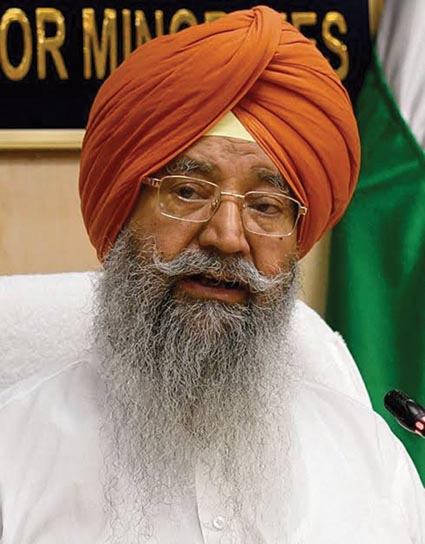
Dr Iqbal Singh Lalpura
Former Chairman National commission for minorities GOVERNMENT Of India
Iqbalsingh _73 @yahoo.co.in