Should Khalsa Ji Ki Ardas (Formal Prayer) Commemorate 1984 Ghallughara (Holocaust/Genocide)?
Sikh Ardas is the daily supplication that serves as a summary of Sikh history, remembering key episodes. Over the centuries, the Ardas has strengthened Sikh resolve and collective commitment to resist oppression and to work for the wellbeing of all. The Ardas embeds historical strength into collective Panthic action. It promotes Panthic cohesion as a theo-political entity.
The inclusion of the 1984 Sikh Genocide, now also called the Third Ghallughara, in the Ardas, is an ongoing topic. The Third Ghallughara is remembered by the Sikhs as the ten-years period which started in June 1984 with the invasion by the Indian Army of Panjab State, Darbar Sahib and most historical Gurdwaras in the state.
While the standardized text of the Ardas in the Sikh Rehat Maryada (code of conduct), chronicles foundational martyrs from the times of the Gurus and the two Ghallugharas in the 18th centary, the Ardas is drafted by highly respected Sikh scholars to incorporate contemporary historical struggles. The decision to explicitly alter or expand the community-wide prayer involves global Panth-wide consultation to collate theological, institutional, and historical viewpoints.
Those in support of inclusion of the Third Ghallughara in the Ardas, argue that the thousands of innocent lives lost during this period represent a modern Ghallughara that naturally belongs in this timeline. Inclusion into the daily Ardas ensures that younger generations never forget the state-sponsored violence and the ongoing pursuit of justice. In fact, in many Gurdwaras and Panthic gatherings worldwide, the martyrs (Shaheeds) of June and November 1984 are mentioned in the flexible concluding part of the Ardas. So, the global Sikh community generally bridges opposing views by maintaining the traditional core text of the Ardas, while utilizing the adjustable sections of the prayer to explicitly honour the victims and Shaheeds of 1984.
There is a strong case for taking this issue to Sri Akal Takht Sahib for deliberation and, hopefully, inclusion of the Third Ghallughara in the Sikh Rehat Maryada part of the Ardas. At present times when Sikh history is being distorted by State scholars, the Third Ghallughara deserves permanent recognition in the Ardas.
Satluj film completed in 2022, based on the life of human rights activist, Jaswant Singh Khalra, never made it to the cinemas. Khalsa investigated allegations of extrajudicial killings during the prolonged Third Ghallughara. He himself was abducted and murdered by Punjab police officers. His legally accepted evidence showed the extent of extra-judicial killings and the complete breakdown of rule and law in Panjab.
Much is going on in the Sikh world today. There is confrontation between the Indian State and Sri Akal Takht Sahib. An Indian press headline reads: Takht Vs Government - Constitutional supremacy must guide stakeholders. The conflict stems from the Sikh concept of miri (temporal authority) and piri (spiritual authority) which, for the Sikhs, ultimately resides in the Institution of Sri Akal Takht Sahib.
The scars of the Third Ghallughara remain unhealed. Many Sikhs feel the Indian state has never adequately delivered justice for the thousands killed, as high-level political figures were largely shielded. Tensions stem from post-partition feelings of broken political promises, linguistic disputes, river water injustices, and the central refusal by the Indian State to grant Panjab greater autonomy.
Sikhs have long demanded that their distinct politico-cultural and religious identity be explicitly recognized by the Indian state, which often clashes with State push toward a centralized, Hindu-majoritarian national identity.
The Third Ghallughara deserves remembrance in our Daily Ardas.
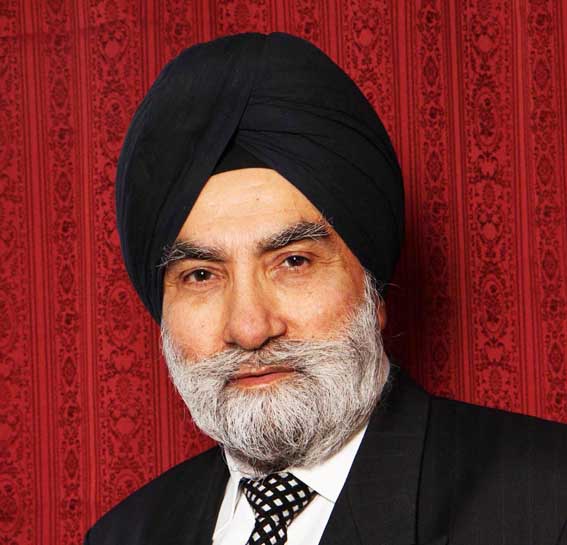
Gurmukh Singh OBE
E-mail: sewauk2005@yahoo.co.uk
https://www.sikhiwiki.org/index.php/Gurmukh_Singh_OBE