Third Ghallughara Remembrance in Daily Ardas
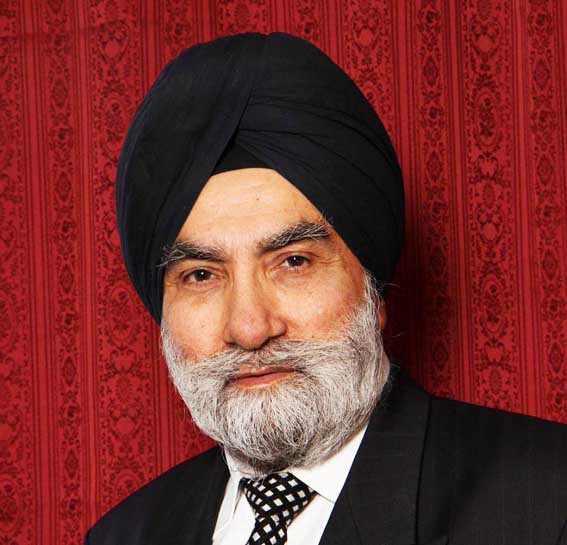
. Ardas is the one Record the Panth keeps which no state can hold, edit, or decline to keep. (Gurjit Singh Sandhu, PanthSeva)
The topic last week about commemorating in Khalsa Ji Ki Ardas, 1984 Ghallghara, continues in cyber forum discussions. There is a view that forty-two years on, the Third Ghallughara deserves remembrance in our daily Ardas.
This week, the column summarises some main points made in exchanges with by S Gurjit Singh Sandhu, a London based scholar. He is the founder of PanthSeva, an independent digital publication, platform, and resource dedicated to Sikh thought, governance, and Gurbani practice.
Gurjit Singh agrees that the Ardas has been amended under the weight of history within living memory: the petition for the darshan and seva-sambhal of Sri Nankana Sahib and the gurdwaras from which the Panth was separated, entered after 1947. A community wound carried into the daily prayer, by Panthic decision, in the language of the Ardas. What was done for the separation of 1947 can be done for the Ghallughara of 1984. The Ardas is the right place. It is the oldest register the Panth possesses and it is the one register no state can hold, edit, or decline to keep.
The Satluj film, generally accepted as depicting the brutal truth of the Third Ghallughara uncovered by Bhai Jaswant Singh Khalra, completed four years ago, never reached the screen. However, the state can keep a film from cinemas it cannot keep out a clause from the Ardas.
There is the CBI report on the 2,097 cremations, the September 1995 inquiry file, the inquest registers, and evidence on oath, which one former District Magistrate has already offered to give.
In Babar Vani Guru Nanak Sahib laments that no one heeded the dead. The Ardas is how the Panth heeds them. The files relating to the thousands who lost their lives are the account we require of the state the Ardas is the account we keep ourselves. Historically, the Panth never depended on the state to keep that account.
It has been stressed by leading Sikhs that Punjab is not seeking an armed conflict rather, it is continuously pushing Delhi for fair economic treatment, federal autonomy, and respect for its distinct cultural identity. Panjab seeks fair treatment and justice. Bhai Jaswant Singh Khalra, himself a victim, and thousands of families are still waiting justice, which has been delayed and, therefore, denied by the state.
The film Satluj (formerly Punjab 95) has intensified debate about state interference in Sikh affairs. We agree with an observation that by chronicling the true story of activist Jaswant Singh Khalra, who exposed the extrajudicial killings and mass cremations of thousands of young men, the film has reignited raw historical trauma and discussions of accountability. The film brings academic and public focus to one of the most painful eras of the Punjab insurgency (1984&ndash1995). It has educated a new generation on the specific human rights work of Khalra, who compiled data on thousands of unidentified bodies cremated by police.
Memorializing Third Ghallughara will give relief to the families concerned and become a permanent part of Panthic record. Global Jathebandis would wish to consider imploring Sri Akal Takht Sahib to include suitable wording in the Ardas to commemorate those who lost their lives.
The timing is right.
Gurmukh Singh OBE
E-mail: sewauk2005@yahoo.co.uk
https://www.sikhiwiki.org/index.php/Gurmukh_Singh_OBE