Punjab Must Learn the Lessons of Its Tragic Past
Punjab is not merely a geographical region. It is the sacred land of the Gurus, a land that has inspired humanity with the universal message of peace, equality, courage and sacrifice. From Guru Nanak Dev Ji, born at Nankana Sahib, to Guru Gobind Singh Ji, whose Khalsa transformed ordinary men and women into fearless defenders of righteousness, Punjab has always stood for spiritual strength and moral courage.
Historically, Lahore occupied a central place in Sikh history. The family of Guru Ram Das Ji belonged to Lahore, and under the Sikh Misls and Maharaja Ranjit Singh, Lahore remained the capital of the Sikh Empire for nearly a century. The Partition of India in 1947 shattered this historic landscape. Most of the territories associated with the Sikh Empire and many of Sikhism&rsquos holiest places were left in Pakistan. Millions were displaced, and countless families were uprooted from their ancestral homes.
Partition itself was one of the greatest human tragedies of the twentieth century. Punjab bore its deepest wounds. Hindus, Muslims and Sikhs all suffered enormously. Hundreds of thousands lost their lives, and millions became refugees overnight. Sikh families who had lived for generations in West Punjab crossed into India with little more than faith and determination to rebuild their lives.
Yet, the trauma did not end with Partition.
Independent India faced the difficult task of accommodating diverse linguistic, cultural and religious aspirations. Many Sikh leaders believed that commitments made before Independence regarding the community&rsquos political and cultural aspirations were not fully realised. The movement for Punjabi language and Punjabi Suba generated prolonged political agitation. Over the decades, political competition, administrative failures, mistrust, and growing alienation created conditions that eventually contributed to the emergence of militancy in the late 1970s and its escalation throughout the 1980s.
Whatever the reasons behind its origins, militancy proved disastrous for Punjab.
The statistics tell a heartbreaking story.
Annual Fatalities in Terrorist-Related Incidents (1981&ndash1996)
Category Fatalities
Civilians 11,696
Security Personnel 1,746
Terrorists 8,093
Total 21,535
Between 1981 and 1996, Punjab witnessed the loss of 21,535 human lives.
These are not merely figures recorded in official documents. Every number represents a family whose future was shattered forever.
Among those who died were 11,696 civilians&mdashfarmers, labourers, teachers, traders, students, women, children and elderly citizens who had no role in the conflict. They simply happened to live during one of Punjab&rsquos darkest periods.
Another 1,746 security personnel sacrificed their lives while performing their constitutional duty. Many belonged to Punjab itself, while others came from neighbouring states to restore peace. Behind every uniform stood parents, wives, husbands and children who bore the lifelong pain of their sacrifice.
The conflict also claimed the lives of 8,093 militants, many of them young Punjabis. Regardless of the choices they made, they too were sons of grieving mothers and fathers. Violence consumed an entire generation that might otherwise have contributed to Punjab&rsquos prosperity.
No mother measures her grief by the path her son chose. Every death leaves the same emptiness at home.
The years 1990, 1991 and 1992 were particularly devastating, accounting for more than 13,000 deaths in just three years.
Punjab became a land of fear.
Markets closed before sunset. Buses and trains became targets. Families hesitated to travel after dark. Weddings were conducted in silence. Business investment stopped. Industries migrated elsewhere. Educated youth began leaving the state in search of security and opportunity. Tourism disappeared. The economy suffered enormously.
Punjab, which had proudly led India through the Green Revolution and once ranked among the country&rsquos most prosperous states, gradually lost much of its economic momentum. The psychological scars remain visible even today.
Perhaps the greatest tragedy was that the overwhelming majority of those who suffered were Punjabis themselves.
People speaking the same language.
People sharing the same culture.
People celebrating the same harvests.
People living in neighbouring villages.
In many cases, both those who carried weapons and those who confronted them belonged to the same soil.
Punjab was bleeding from within.
The tragedy also had international dimensions. Pakistan, with whom Punjab shares a 550-kilometre international border, sought opportunities to exploit instability for its own strategic interests. External support to extremist violence further complicated the situation and prolonged the suffering of ordinary Punjabis. Ultimately, foreign powers neither suffered the consequences nor rebuilt Punjab. It was Punjab&rsquos own families who paid the highest price.
History also teaches another painful lesson.
Communities become vulnerable when internal divisions deepen. During colonial rule, policies that classified Punjabis primarily as separate religious communities rather than as a shared cultural society contributed to long-term political divisions. After Independence, successive political struggles often prioritised electoral calculations over reconciliation. Instead of building trust, many leaders chose confrontation.
Punjab paid the price.
The lesson is unmistakable.
Violence never produces lasting prosperity.
Hatred eventually destroys those who spread it as much as those against whom it is directed.
No ideology, however passionately believed, can justify the loss of thousands of innocent lives.
Today, several films and media productions revisit the years of militancy. Cinema is an important artistic medium, but it is also a commercial enterprise. Dramatic storytelling often requires simplification, emotional amplification and selective presentation of historical events.
Filmmakers therefore carry a profound responsibility.
Historical tragedies should educate future generations, not deepen old divisions or reopen healing wounds merely to generate commercial success. Every creative work dealing with Punjab&rsquos painful past should recognise that behind every dramatic scene stood real families whose lives were permanently altered.
Public debate regarding films depicting this period&mdashincluding productions such as Punjab 95 or Ghalughara or Sutlej, or any other name one gives , should remain within the framework of democratic dialogue and lawful institutions. Differences of opinion should be resolved through discussion, certification processes and constitutional mechanisms, not by intimidation or threats.
Internationally respected artists such as Daljit Dosanjh have earned admiration through their talent and achievements. Their influence reaches millions across the world. Such stature also carries the responsibility of promoting understanding, harmony and respect for history rather than allowing public discourse to become further polarised.
Punjab does not need another generation divided by memories of violence.
It needs a generation inspired by the teachings of the Gurus.
Guru Nanak Dev Ji rejected hatred and preached the oneness of humanity.
Guru Arjan Dev Ji embraced martyrdom without bitterness.
Guru Tegh Bahadur Ji sacrificed his life for the religious freedom of others.
Guru Gobind Singh Ji transformed suffering into courage while declaring the eternal dignity of humanity.
Their message was never one of revenge.
It was one of righteousness with compassion.
In recent years, several initiatives of the Government of India under the leadership of Prime Minister Shri Narendra Modi have sought to honour Sikh history and heritage through commemorations, memorials, restoration projects and international recognition of Sikh contributions. These efforts provide opportunities to strengthen confidence and preserve the rich legacy of Sikhism for future generations. Such initiatives should be viewed as occasions for further dialogue, mutual trust and national integration.
The Sikh community has always strengthened India.
From defending the nation&rsquos borders to feeding millions through the institution of Langar&hellip
From extraordinary contributions to agriculture during the Green Revolution to distinguished service in the armed forces, civil administration, science, business and public life&hellip
Sikhs have consistently demonstrated that their strength lies in service, sacrifice and patriotism.
As the famous lines remind us:
&ldquoNa kahun ab ki, na kahun tab ki agar na hote Guru Gobind Singh, sunat hoti sab ki.&rdquo
The verse reflects the widely held belief that Guru Gobind Singh Ji&rsquos leadership protected the religious freedom and dignity of countless people. Whether Sikh or non-Sikh, generations have drawn inspiration from that legacy of courage.
Today, Punjab needs healing rather than hostility.
Justice rather than vengeance.
Dialogue rather than division.
Development rather than destruction.
The younger generation must know the truth about the past&mdashnot to inherit hatred, but to understand the terrible cost of violence. Every statistic represents a human face. Every casualty was someone&rsquos child. Every grieving family belonged to Punjab.
The greatest tribute we can pay to all who died civilians, security personnel and militants alike is to ensure that such a tragedy is never return to our land.
Punjab has overcome invasions, Partition and terrorism. It possesses the strength to overcome division as well.
Let us honour the Gurus by rebuilding trust.
Let us honour the martyrs by preserving peace.
Let us honour the next generation by giving them a Punjab known not for conflict, but for prosperity, education, enterprise, spirituality and human dignity.
The future of Punjab must be written not with bullets, but with compassion not with fear, but with hope not through division, but through unity.
Only then will the painful sacrifices of those tragic years acquire lasting meaning.
Only then will Punjab truly heal.
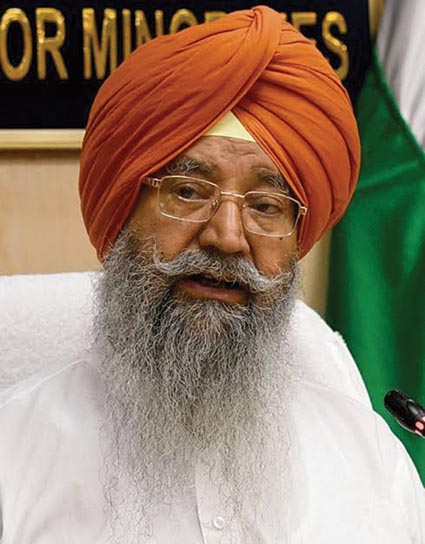
Dr. Iqbal Singh Lalpura
Former Chairman National Commission for Minorities
Government of India
Iqbalsingh _73 @ yahoo . co . in