Sikh Gurdwaras Act 1925: Sri Akal Takht Sahib The Sovereign Seat of Global Sikh Organisation
-
Sikh religious authority should come from an accountable global process.
-
The Sikh Gurdwara Act 1925 has been amended by the British, the Punjab legislature, executive orders, the Government of India and Parliament but never once by the Panth!
Over a hundred years ago, on 28 July 1925 the Sikh Gurdwaras Act received assent. The 1925 Act was a real Sikh victory over the hereditary mahants. The Panth won management of historic gurdwaras but the State kept the pen. The 175 member representative committee had already been formed in 1920 and the law followed in 1925. So, the Government recognition came after Sikh organisation, not before. It is significant that since 1925, not once has the Act been amended by the Panth!
The Government of India today holds the main legal machinery for SGPC renewal: the election date, key election rules, the constituency process and the appointment of the Chief Commissioner. That machinery is administered through the Union Home Ministry. Sikh religious elections sit inside the internal security wing of the Indian state.
The last SGPC general election was held in 2011. A Home Ministry reply said its term ended on 16 December 2016. The same House still sits in 2026. By November 2022, twenty-six elected members had died. A whole generation of young Sikhs has never voted in an SGPC general election.
Changing the people does not solve the problem that no government should define Maryada, Satkaar, Takht authority or the Sikh electorate. Replace the president, the members, the Akali Dal, the Badal family, the Punjab Government, even the party ruling in Delhi. Unless the law itself changes, the next government inherits the same powers.
Recently, Punjab has repeated the mistake with the Satkaar laws. Sikh institutions invited the Punjab Government into this field in 2007 and 2008. The 2026 amendment widened it greatly. A better Punjab Act is still a Punjab Government Act. The next Assembly can change it again.
The Punjab Vidhan Sabha monsoon session runs from 3 to 10 August 2026 and is expected to consider Satkaar amendments. The question is not only which clauses will change but who keeps the power to change the Act again.
The answer is complete repeal. Repeal the Sikh Gurdwaras Act 1925 with all its amendments. Repeal the 2008 Satkaar Act and the 2026 amendment. Do not replace them with another Punjab Sikh law or an All India Gurdwaras Act. General law should punish fraud, violence and crime for everyone equally. However, to repeat, no government should define Maryada, Satkaar, Takht authority or the Sikh electorate.
The next century must be a century of global Sikh organisation. The Sikh nation is worldwide. Sikh religious authority should come from a transparent global process under Shabad Guru. Sri Akal Takht Sahib remains the sovereign historic Sikh seat. A global process would not replace it or create another Takht. It would give it a trustworthy mandate from Sikhs across the world. Governments would then deal with representatives chosen by Sikhs, not Sikhs chosen by governments.
It is over a hundred years since the Sikh Gurdwara Act 1925 took control away from hereditary mahants. In the next century, control of Gurdwaras must be placed in the hands of the Global Panth.
It is for the Panth to agree the due process and organisation.
Further reading: Paper by Gurjit Singh Sandhu of PanthSeva:
https://www.panthseva.com/p/amended-by-empire-province-and-parliament
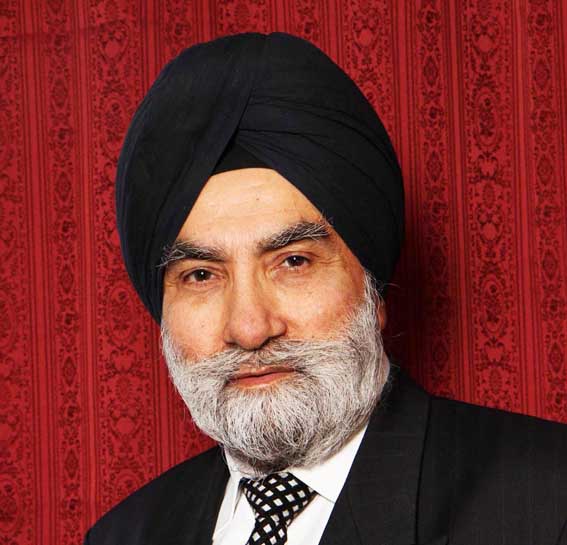
Gurmukh Singh OBE
E-mail: sewauk2005@yahoo.co.uk
https://www.sikhiwiki.org/index.php/Gurmukh_Singh_OBE