Beyond Power and Retirement! Living in the Present by Serving Society
An officer or a judge enters public service after passing a prescribed examination. With that examination come salary, allowances, authority, and social standing. These are not privileges granted for personal comfort they are instruments entrusted to serve society, as a friend, a guide, and a protector of the weak. Whether in the executive, police, or judiciary, the essence of public service remains the same: to uphold justice, resist wrongdoing, and stand firm against pressure of power or money.
This is the ideal. The reality often falls short.
During service, authority creates a protective illusion. Files move, orders are complied with, and influence appears natural. But many learn, consciously or unconsciously, to adjust rather than reform, to avoid difficult decisions, to dilute justice, to rationalize silence. In this gradual compromise, institutions weaken and public faith erodes. Corruption is not always about taking money it is equally about surrendering independence.
Yet every public servant remembers moments when he or she resisted pressure, when a powerful person was denied an illegal favour, when money failed to bend a decision, when the law was allowed to take its course. In those moments, the system may have frowned, but society silently blessed. The satisfaction of those decisions lingers long after retirement. Those blessings are the true rewards of service.
Guru Nanak Dev Ji reminded rulers and administrators centuries ago that justice is the foundation of governance: &ldquoRaja chuli niau ki .&rdquo (Ang 1240)
When justice is cooked in the vessel of truth, only then does governance become righteous. When justice is diluted by fear or favour, authority loses moral legitimacy.
The judiciary, no less than the executive, carries this burden. Courts are the final refuge of the citizen. When judges withstand pressure from power, wealth, or popular sentiment, democracy breathes. When they falter, injustice becomes institutional. Judicial independence is not protected merely by constitutional provisions it survives through personal courage exercised daily, quietly, often without applause.
One fundamental truth distinguishes bureaucracy and judiciary from political power. Political authority is temporary, subject to elections and public mood. Bureaucracy and judiciary are continuous institutions, extending beyond governments and regimes. This continuity is not a weakness it is a moral strength. It gives the civil servant and the judge a unique opportunity to serve without fear of electoral loss. This space between permanence and transience is where public service must find its courage.
When this opportunity is wasted, retirement exposes the truth. Majority of them comes from rural or suburban areas, which they leave for better opportunities and majority settle down in the capital area of the country or state. However after retirement there is no one to call them their own and they hesitate to be with their villagers whom they never looked back.
After retirement, the uniform is folded, the gavel rests, the official chair is vacated. The retired officer or judge becomes an ordinary citizen, standing in queues, waiting for hearings, seeking basic services. This transition should lead to reflection. If one held authority for decades and yet the system still humiliates the citizen, including oneself after retirement, then the failure is not abstract. It is collective and personal.
Retired officers and judges are not alone in this responsibility. Retired Army officers, with their deep sense of discipline, leadership, and organisational training, also have a vital role to play in rebuilding society. Having led jawans in the most testing circumstances, they possess the moral authority and practical experience to mobilise disciplined, law-abiding citizens. Along with former soldiers and conscientious retired civil servants, they can help organise innocent civilians to stand firmly against drug peddlers, organised criminals, and mafias that are vitiating society and destroying the future of Punjab&rsquos youth. Such collective action does not mean taking the law into one&rsquos own hands rather, it means strengthening society from within&mdashcreating awareness, supporting lawful institutions, resisting fear, and restoring confidence among citizens. When experience, discipline, and conscience come together, they can act as a powerful deterrent to those who thrive on silence and helplessness, and can help reclaim social spaces surrendered to crime and addiction.
Many choose to withdraw into comfortable isolation, living on memories of power once exercised. Clubs, social gatherings, and endless recollections replace engagement with present realities. Nostalgia becomes a shelter from accountability. But past authority is not contribution, and leisure is not legacy.
Punjab today stands in need of its experienced minds. Erosion of institutional trust, challenges to law and order, youth alienation, drug abuse, and social fragmentation demand wisdom forged through experience. Retired officers and judges possess deep understanding of where institutions fail and how they can be repaired. Silence at this stage is not neutrality it is abdication.
Mistakes made during service need not define failure. Acknowledged honestly, they can guide reform. Retirement offers freedom&mdashfrom transfer, pressure, and fear. It is the stage where truth can be spoken without consequence to career, and service can continue without compromise. Guru Gobind Singh Ji gave a timeless call to ethical action: &ldquoShubh karman te kabhun na taron.&rdquo
Never retreat from righteous action. This command does not expire with retirement. In fact, it becomes more relevant when authority is gone and only conscience remains.
Philosophers across civilizations echo this truth. Edmund Burke warned that &ldquothe only thing necessary for the triumph of evil is for good men to do nothing.&rdquo Public servants who do nothing after retirement allow the erosion they once witnessed to continue unchecked.
Punjab does not need retired officials who live in the shadow of past power. It needs citizens of conscience who live in the present and serve society with clarity and courage. It needs former officers and judges who mentor, guide, write, speak, and stand, using experience not to dominate discourse but to elevate it. The examination was only an entry point. Service was the test. What one does after retirement is the final moral audit.
Institutions survive on rules, but societies survive on conscience. Power fades. Integrity endures.
Punjab is waiting, not for authority, but for responsibility renewed through experience.
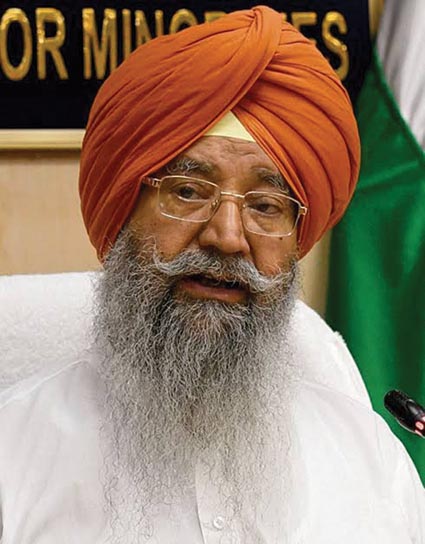
Iqbal Singh Lalpura
Former Chairman National Commission for Minorities
Government of India