Minority Rights Traded in a Multipolar World
We are now in the age of a multipolar world divided into three or more large blocks looking mainly for trade benefits at the expense of human rights. International laws safeguarding minorities are already being ignored and minority rights have become part of multipolar bargaining chips in trade deals. Interests of smaller nations and global minority communities like the Sikhs are increasingly at the risk of trade-offs in multi-billion dollars trade and defence deals.
Global power is now divided not between two super powers but between large countries like the US, China, EU, Russia and India. Experts point out that power is measured in economic, military, and technological capabilities, with China increasingly challenging the US, and groups like BRICS rising in influence. This is the age of complex, competitive and shifting alliances. By putting America first, President Trump has pushed the world towards this multi-polar scenario creating a most uncertain future for the world.
Global institutions like the United Nations and the World Trade Organisation aiming for just laws and fair trade respectively for all countries and peoples, by creating a global level trading field for all, have been weakened. World Trade Rounds were aimed at lowering tariffs to ensure fair deals for developing countries so that economies become interdependent through outsourcing and complementary trade. So that each country could focus on what it produced best and selling and buying goods at fair prices. The idea was to narrow the North-South, rich-poor, countries gap. That process seems to have come to a standstill.
An increasingly multi-polar world is a great loss in terms of global initiatives to deal with global challenges like environmental issue, leading to an even more uncertain future of humankind while world population and unemployment is increasing. That increases demand for water, food, energy, and land, leading to biodiversity loss, deforestation, and climate change.
A multipolar world sees power moving towards regional powers and rising nations. Local conflicts between neighbours are increasing. A good example is India, surrounded by hostile neighbours.
However, there are counter arguments by supporters of a multipolar world. They often argue that it is more democratic to oppose the universality of Western values and encouraging sovereign civilizations. I suspect many Indian thinkers and politicians belong to this school. The relevance of ancient civilisations and systems to the New Age world can be questioned, as did Guru Nanak Sahib. In fact, the Bhagti Movement in India was a rebellion against so called ancient Indian civilization which created high-low societal divisions and inhuman rituals and practices.
Can the human race survive a multipolar world order. The AI (artificial intelligence) response is that the world can survive, while facing increased risks of instability, conflict, and volatility. A shift away from U.S. hegemony toward multiple power centers (e.g., China, India, EU) increases the potential for miscalculation and reduced international cooperation. However, it also allows for greater cultural diversity and potential for, or necessity of, new, more, or different diplomatic, regional, and consensus-driven agreements.
Nevertheless, multipolar systems will create clashing interests. They involve more main nations and will be less stable than bipolar or unipolar systems the world has been used to after World War II. If managed correctly, a multipolar word can lead to more consensual approach to international relations.
As the world shifts toward a multipolar order, the survival of an increasing population depends on how effectively multiple global powers cooperate to manage shared threats.
Minority community strategists need to think ahead.
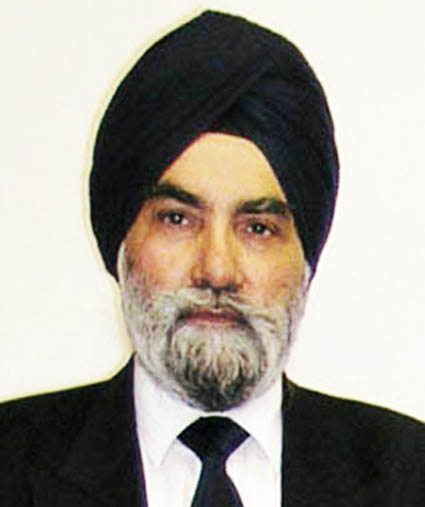
Gurmukh Singh OBE
E-mail: sewauk2005@yahoo.co.uk
https://www.sikhiwiki.org/index.php/Gurmukh_Singh_OBE