PM Modi Visit to Israel Two Days Before US-Israel Iran Invasion, Ill-Timed
Some leading Indian thinkers and strategists like Kapi Sibal, ex-Union Minister, believe that it was not wise for PM Modi to visit Israel on 25-26 February, just before joint US-Israel attack on Iran on 28 February, 2026. The language and symbolism of the visit can prove to be costly for India, otherwise aspiring to become a leader of non-aligned nations.
The Iran operation was started by the US urged by Israel without full consultation with traditional Western allies. It was codenamed Operation Epic Fury (US) and Operation Roaring Lion (Israel). PM Modi had hardly left Israel when the order was given by President Donald Trump at 3:38 p.m. EST on 27 February 2026. It can be assumed that PM Modi knew about the invasion which most experts have condemned as illegal under international law.
The main aims were stated as a regime change and to stop the nuclear and ballistic missile projects of Iran. The first strikes killed the Supreme Leader, Ayatollah Khamenei, and many other senior officials. Iran retaliated by launching Operation True Promise IV, by firing hundreds of ballistic missiles and drones at Israel and US military bases in Bahrain, Qatar, Kuwait, and the UAE. Israel further expanded the conflict by attacking Hezbollah in Lebanon.
Iran closed the Strait of Hormuz through which large tankers carry 20% of the global oil causing global economic and energy shocks. Oil prices have been driven to over $100 per barrel. The oil-carrying shipping blockage is the worst in history, mainly at Hormuz and also at Red Sea. Groups like Hezbollah and the Houthis carry out asymmetric attacks. Israel has been drawn into wider regional conflicts and its weapons and defences do have limitations.
Iranian attacks on regional energy hubs in the UAE, Saudi Arabia, and Oman have disrupted the lifeblood of Gulf economies.
In the meantime, President Trump seems to have no exit strategy from this war and things can only get worse. Gulf states can move away from the U.S. to protect themselves from further Iranian retaliation, seeking more autonomous security arrangements. Iran has the industrial knowledge to resume enrichment. It has huge hidden stockpiles of drones and ballistic missiles.
So, it is not surprising that most world leaders, including the UK PM Starmer, are against this illegal war which can assume a very unpredictable and dangerous extremist Islamic jehadi dimension leading to global acts of terrorism. The West is vulnerable due to mass uncontrolled migrations which can increase.
PM Modi should have known the consequences before his visit to Israel. To quote Indian sources, former diplomats and opposition parties, such as the Indian National Congress, argued the visit was ill-timed and stripped India of its traditional stance of neutrality, making it appear as a tacit endorsement of the subsequent strikes.
It was noticeable that PM Modi did not criticise Israel for the human rights abuses in Ghaza during his visit. Anti-Muslim stance of Modi administration can be linked with this visit. The timing of the visit endangered millions of Indian workers in the Gulf region. Trade agreements signed between India and Israel are unlikely to offset the damage done in the long run to Indian neutrality, economy and geo-political position.
Ultimately, PM Modi visit achieved bilateral trade gains but has forced India to manage a much more complex and volatile regional landscape.
As stressed in an earlier column, minority community strategists need to think ahead in an increasingly uncertain world.
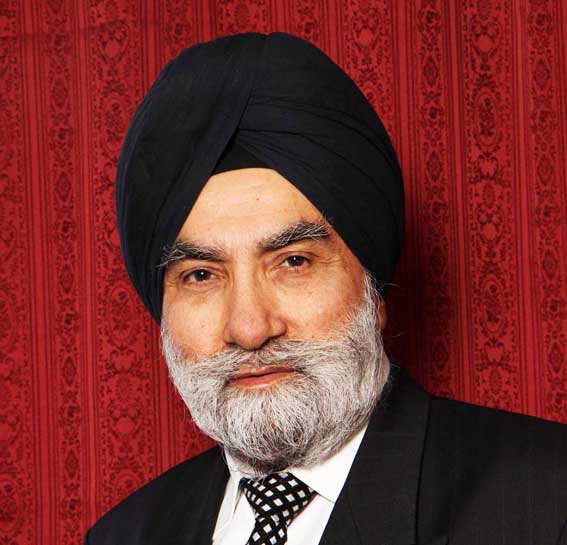
Gurmukh Singh OBE
E-mail: sewauk2005@yahoo.co.uk
https://www.sikhiwiki.org/index.php/Gurmukh_Singh_OBE