Let Us Reform the Bureaucracy to Serve the Interests of the Nation
In 1854, Thomas Babington Macaulay laid down the principles for recruitment to the higher civil services in India. The objective was to create a small but highly competent administrative class to serve the interests of the British Crown and govern India in absentia. These officers were expected to possess breadth of general knowledge, analytical rigour, and strong character. The British believed that a limited number of capable officers, properly trained and well paid, would ensure efficient administration and loyalty.
The British system followed a clear philosophy. Fewer officers were appointed at the top, but they were paid handsomely and given security of tenure and prestige. The Chief Secretary, for instance, was paid around Rs. 3000 per month in those days, an extremely high salary for that period, along with additional ex-India allowances and privileges. This was done deliberately to reduce corruption and ensure that officers remained independent and loyal to institutional authority rather than individuals.
Initially, Indians were excluded from this elite service, but gradually limited entry was allowed. Even then, the structure remained compact, disciplined, and hierarchical &mdash a classic administrative pyramid, with very few officers at the top and larger numbers at the lower levels. This pyramid structure ensured clarity of command, responsibility, and accountability.
After Independence and particularly after Partition, India retained this administrative framework but introduced democratic accountability. Promotions from State Civil Services were allowed, and officers with ten years of service as gazetted officers could also enter higher administrative positions. Decision-making authority shifted to elected political representatives, while bureaucracy was expected to assist in policy formulation and implement decisions in accordance with law.
However, at the same time, India adopted a socialist of governance. The ideological shift toward equality and expansion of government functions led to rapid growth in bureaucracy. Government departments multiplied, public sector undertakings expanded, and administrative structures became larger and more complex. Instead of a compact pyramid, the system gradually began to flatten at the top.
The Western administrative philosophy was to appoint fewer officers, pay them well, and hold them accountable. The Indian adaptation, influenced by socialist thinking, moved toward appointing larger numbers of officers but paying relatively lower salaries, particularly in earlier decades. This created unintended consequences. When salaries and incentives are not aligned with responsibility, and when perks and privileges become attached to postings rather than rank, a system develops in which officers compete for favourable postings rather than focus on performance.
Today, in many departments, there are dozens of officers at senior levels &mdash Additional Secretaries, Special Secretaries, Advisors, Commissioners, and equivalent ranks &mdash often creating congestion at the top. The traditional administrative pyramid has, in some cases, become distorted, with a wider top and unclear lines of responsibility. Instead of a sharp pyramid with a clear chain of command, the structure sometimes resembles a plateau at the top, leading to overlapping authority and diluted accountability.
Another consequence is the emergence of a culture where postings determine influence, perks, and opportunities. When privileges are attached to specific assignments rather than rank, officers may become vulnerable to external pressures, including political influence. This weakens institutional independence and encourages a &ldquoYes Boss&rdquo culture, where long-term institutional interests may be compromised for short-term administrative convenience.
Frequent transfers further aggravate the problem. Officers are often shifted before they can deliver results, and appointing authorities sometimes lack effective control over tenure stability. This leads to uncertainty, short-term decision-making, and erosion of accountability. Instead of building domain expertise and long-term planning, officers are compelled to focus on survival within the system.
Another concern is the growing disparity between central and state government employees. Differences in pay scales, service conditions, and career progression create dissatisfaction and affect coordination. Since governance today requires close coordination between Centre and States, such disparities weaken administrative efficiency.
The fact that officers at the highest levels &mdash including Chief Secretaries, Secretaries to Government, and Directors General of Police &mdash have faced allegations of corruption and irregularities in some cases has also raised concerns. While the majority of officers remain honest and committed, even isolated cases at senior levels affect public confidence and institutional credibility.
India&rsquos bureaucracy has made enormous contributions &mdash managing Partition, conducting elections, implementing development programmes, and maintaining administrative continuity in a diverse democracy. Yet, the time has come to revisit the structure itself. The administrative pyramid must be restored, with clear hierarchy, limited numbers at the top, stability of tenure, and accountability linked to performance rather than postings.
More than 170 years after Macaulay&rsquos reforms and nearly 80 years after Independence, India needs a modern bureaucracy that combines the efficiency of the Western with the democratic values of Indian governance. A smaller, better trained, well-paid, and accountable leadership at the top, supported by an efficient administrative structure below, can restore confidence and improve governance.
Reforming the bureaucracy is not merely an administrative exercise. It is essential for strengthening democracy, ensuring development, and serving the interests of the nation.
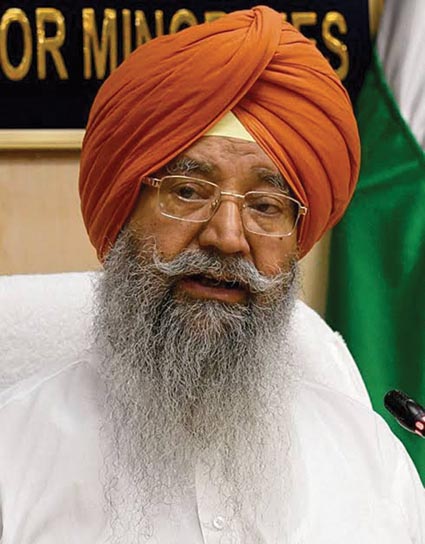
Iqbal Singh Lalpura.
Former Chairman
National Commission for Minorities
Government of India